
Ideas on agents, search, and the live web.
Technical guides on agentic AI, MCP search, retrieval quality, and systems that retrieve reliably.
Why Your AI Agent Keeps Hallucinating: The Web Context Problem
AI agents hallucinate when they act from stale memory, missing evidence, or noisy retrieval. The fix is better web context before action.
What Is MCP? The Model Context Protocol Explained for AI Developers
MCP is the standard way for AI apps and agents to connect to tools, data sources, and workflows. Here is the developer-friendly explanation.
How to Stop Your Coding Agent from Using Outdated Documentation
Outdated docs cause coding agents to write broken code. Stop stale-documentation failures with retrieval gates, source filters, version checks, and runtime verification.
SPLADE, ColBERT, and Cross-Encoders: How Modern Agent Search Works
Modern agent search combines sparse retrieval, late interaction, and reranking. Here is how SPLADE, ColBERT, and cross-encoders fit together.
Setting Up Ninelayer MCP with Claude Code: Step-by-Step
Connect Ninelayer to Claude Code with MCP, verify the search tools, and use retrieval-first prompts for safer coding-agent workflows.
OpenSearch for AI Agents: Architecture Patterns and Lessons Learned
OpenSearch can power agent retrieval when you combine lexical search, vector search, neural sparse retrieval, reranking, and careful evidence shaping.
Native Web Search vs. Agent-Native Search: A Real-World Benchmark
Native web search returns pages for humans. Agent-native search returns evidence for models. The right benchmark is whether the agent acts correctly on the first pass.
MCP vs Function Calling: Which Should Your AI Agent Use?
MCP and function calling both connect models to tools, but they solve different integration problems. Here is how to choose.
Maximal Marginal Relevance (MMR) for AI Agents: Getting Diverse, Non-Redundant Results
MMR helps retrieval systems return diverse, non-duplicate evidence. For AI agents, that means fewer redundant sources and better context coverage.
How to Give Your AI Agent Access to the Web Without Browser Automation
Agents do not always need a browser. For many workflows, search and clean URL extraction are faster, safer, and cheaper than browser automation.
Why First-Shot Accuracy Matters More Than Speed for AI Coding Agents
A fast wrong patch is not productivity. For coding agents, first-shot accuracy matters because every failed edit creates token cost, review cost, and retry loops.
Context Budget Management for Long-Running AI Agents
Long-running agents fail when they carry too much context. Manage the budget with summaries, retrieval gates, source filtering, and retry circuit breakers.
The Complete List of MCP Servers for Coding Agents: 2026 Edition
A practical 2026 list of MCP server categories every coding-agent team should evaluate, from search and GitHub to logs, databases, browsers, and internal docs.
Brave Search API vs. Tavily vs. Ninelayer: Which Search Tool Is Best for AI Agents?
Brave Search API, Tavily, and Ninelayer all provide web context, but agent workflows need more than search results. They need evidence, source trust, and MCP integration.
The Best Search Tools for Claude Code, Cursor, and Windsurf in 2026
Coding agents need search tools that return current, source-aware evidence. Here is how to evaluate search for Claude Code, Cursor, and Windsurf.
Authority-Aware Retrieval: Why Source Trust Matters for AI Agents
AI agents should not treat official docs, SEO pages, GitHub issues, and forum answers as equal. Authority-aware retrieval helps agents trust the right sources.
How Researchers Are Using AI Agents and Web Search to Replace Hours of Manual Work
AI research agents can search, read, compare, cite, and summarize sources. The key is reliable web search and source-aware retrieval.
5 Agentic Workflows That Need Real-Time Web Search: With Setup Code
Some agent workflows cannot run on stale knowledge. Here are five examples that need real-time web search, plus a simple MCP setup pattern.
Agent Search vs. RAG: What's the Difference and When to Use Each
RAG and agent search both retrieve context, but they solve different problems. Use static RAG for stable corpora and agent search for live web context.
How to Add Web Search to Claude Code Using MCP in 5 Minutes
Add web search to Claude Code with a remote MCP server, an auth token, and a retrieval-first prompt pattern.
Tavily vs Exa vs Ninelayer
Tavily, Exa, and Ninelayer all help AI systems retrieve web context. The right choice depends on whether you need web search, neural discovery, or MCP-native evidence for coding agents.
OpenAI Codex Alternatives for Coding Agents in 2026
OpenAI Codex is one option in a crowded coding-agent market. Here are the practical alternatives in 2026, with pricing, pros, cons, and how to choose based on workflow, control, context, and retrieval.
How to Use Ninelayer with Cursor
Connect Ninelayer to Cursor through MCP so Cursor can retrieve current technical evidence before editing code, answering questions, or debugging errors.
How to Reduce AI Agent Token Usage
Token savings start before generation. Reduce AI agent token usage by retrieving cleaner context, limiting tool output, summarizing state, and preventing retry loops.
How to Build a RAG Pipeline with LangChain and MCP
Build a simple RAG pipeline with LangChain and MCP by loading MCP tools, retrieving live evidence, passing compact context to a model, and citing sources.
How to Add MCP to Claude Code
A practical guide to adding a remote MCP server to Claude Code, choosing the right scope, keeping tokens out of source control, and verifying that tools are available.
Cursor vs Claude Code for AI Coding
Cursor and Claude Code both help developers ship with AI, but they feel different in daily work. Here is how to choose between an IDE-native agent and a terminal-native coding agent.
Claude Code MCP Tutorial
A hands-on Claude Code MCP tutorial for connecting a remote search server, checking tool availability, and prompting Claude to retrieve evidence before changing code.
Best MCP Servers for AI Coding Agents
The best MCP servers for coding agents are the ones that reduce context gaps: search, GitHub, databases, browser automation, logs, design systems, and internal docs.
AI Agent Hallucination: Why Retrieval Matters
AI agents hallucinate most dangerously when they act on stale or missing context. Retrieval matters because it grounds decisions before the agent edits code or answers users.

The Agentic Mutex
Multi-agent systems create race conditions that can last seconds or minutes. Here is how semantic locks, CAS checks, and sandbox isolation keep agents from colliding over shared state.

The Explainability Architecture: Building Traceable State Trees
Agentic finance cannot rely on raw chat logs for audits. Traceable state trees turn non-deterministic agent behavior into structured, tamper-evident execution records.

The MicroVM Mandate for AI Agents
If an LLM can write files and execute code, a standard container is no longer enough. Here is why production agent sandboxes are moving toward hardware-enforced microVM isolation.
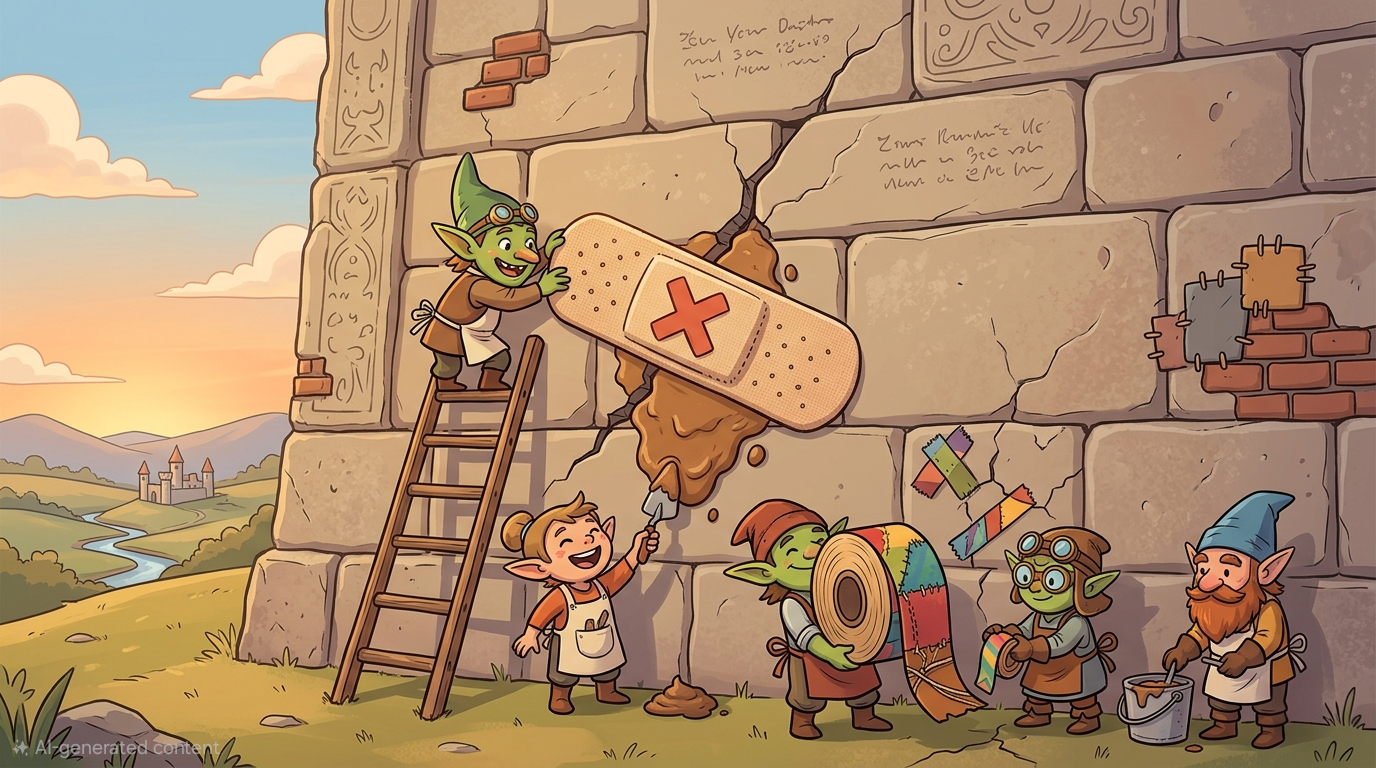
The Self-Healing Vector Database
If one agent discovers that your retrieved context is stale, every future agent should benefit. Here is how to build an errata layer that lets agents patch bad RAG context without corrupting your source of truth.
Defensive Prompting for AI Coding Agents
Stale docs can push coding agents into expensive retry loops. Defensive prompting teaches agents to verify assumptions against the live runtime before writing production code.
When Claude Code Search Fails
Claude Code is strongest when it has the right context before it edits. Here is how to connect Ninelayer through MCP when generic search creates noisy context, stale docs, and expensive retry loops.
Why Search Is the Missing Layer for AI Agents
AI agents like Claude Code, Cursor, and Codex are only as reliable as the context they can retrieve. Search is becoming the infrastructure layer that keeps agents grounded, current, and useful.
The Hidden Token Cost of Bad Retrieval
Your AI agent may be burning thousands of tokens on boilerplate before it starts thinking. Here is the math behind retrieval waste, and why clean, agent-native search matters.